
Brain Games for Kids: Free Puzzles Worth Playing
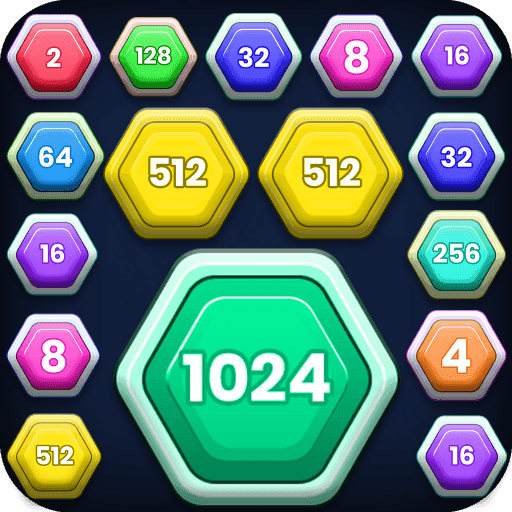
Parents are often told that screen time is bad and that some games are educational, usually in the same week. The truth sits somewhere in the middle. A game does not make a child smarter, but some games do exercise useful skills - planning, counting, patience, spotting patterns - in a way children actually enjoy.
This is a guide to the kinds of games that do that, what each one practises, and how to keep game time a healthy part of the day.
What makes a good brain game for kids
Look for three things.
- A clear goal the child understands without help.
- A reason to think before acting. A game that rewards random tapping teaches nothing.
- No pressure. Timers and countdowns turn thinking into panic, especially for younger children.
The best ones are also games an adult can play alongside a child, because talking through a move is where much of the learning happens.
Number puzzles: counting and planning
2048 is a surprisingly good maths game in disguise. Every move combines equal numbers - two and two make four, four and four make eight - so children practise doubling without thinking of it as sums.
It also teaches planning. Keeping the biggest tile in a corner only works if you think two or three moves ahead.
2048 Cube Jim is best for older children who already know their numbers.
Block puzzles: shapes and space
Fitting pieces into a grid builds spatial reasoning - the ability to picture how shapes fit together. It is the same skill used in drawing, building and geometry.
There is no timer, so a child can look at a piece for as long as they need.
Wood Block Jim suits most ages once children can drag a piece accurately.
Match 3: patterns
Match 3 games are about spotting patterns - three in a row, a shape that makes a bigger match. Younger children enjoy them because every move gives a visible result.
Candy Jim and Candy Sweet Jim are both classic match 3.
Order puzzles: thinking in steps
Screw puzzles ask a simple question: which piece has to come off first? Getting it right means thinking through the order of steps, which is the start of logical reasoning.
Screw Puzzle Jim is slow and calm, with no time pressure.
Board games: counting, turn taking and losing well
Board games teach something puzzles cannot: playing with other people.
Snakes and ladders is ideal for the youngest players. Counting squares practises numbers up to one hundred, and because it is pure luck, a child can beat an adult fairly. Ludo adds real decisions, like which token to move and when to stay safe.
Both also teach waiting your turn and losing without a tantrum, which may be the most useful skill of all.
Snakes and Ladders Jim and Ludo Jim can be played together on one device, or in a private room with family.
Which games suit which age?
A rough guide, since every child is different.
- Around four to six: snakes and ladders, simple match 3. Games with big, clear pieces and no reading.
- Around six to nine: Ludo, block puzzles, bubble shooters, screw puzzles.
- Nine and up: 2048, harder puzzles, and Ludo played with real strategy.
Keeping game time healthy
- Play together sometimes. Asking why a child made a move turns a game into a conversation.
- Set a limit before the game starts, not in the middle of a level.
- Prefer games without timers for younger children.
- Watch for frustration. A game that makes a child upset is too hard for now.
A note for parents on online games
Free games are usually paid for by advertising, and Gamejim is no different. Games on this site are free to play and show ads.
For younger children, it is worth sitting nearby, keeping play in the browser rather than installing apps, and choosing private rooms with family for online board games so only invited players can join.
Frequently asked questions
What are good brain games for kids?
Games that make children think before acting, with no time pressure: number puzzles like 2048, block puzzles, match 3, order puzzles, and board games like Ludo and snakes and ladders.
Are puzzle games good for children's development?
They can help practise useful skills such as planning, pattern spotting and spatial reasoning, especially when an adult plays along and talks about the moves. They are not a replacement for other kinds of play.
What age can children start playing 2048?
Usually around nine and up, once they are comfortable with numbers and doubling. Younger children can enjoy simpler games like snakes and ladders or match 3.
Is snakes and ladders good for young kids?
Yes. It practises counting up to one hundred and taking turns, and because it is pure luck, young children can win fairly against adults.
How much game time is healthy for kids?
There is no single answer, but setting a limit before playing, choosing calm games and mixing screen time with other activities are good habits. Follow any guidance from your paediatrician or local health service.