
2048 Cube Jim: pick a corner and stay there
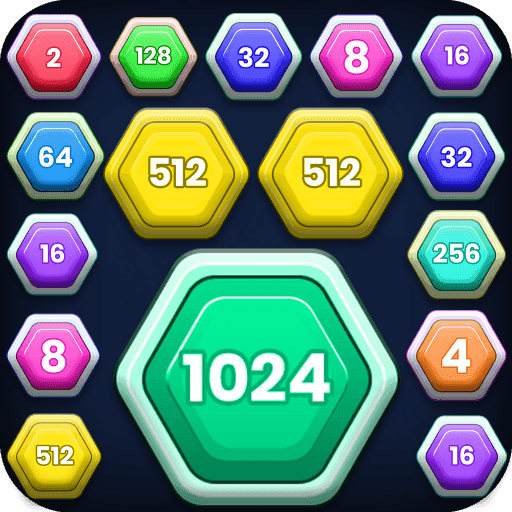
There is one idea in 2048 Cube Jim that matters more than everything else combined, and once you have it your scores roughly double. It is not a trick. It is a habit, and it is quite a boring one.
Your biggest number goes in a corner and it never moves again.
Why the corner rule works
The reason runs die is not that you run out of space. It is that your biggest cube ends up somewhere in the middle with small numbers on every side of it. Nothing can merge with it, and it now occupies the most valuable real estate on the board doing absolutely nothing.
Once that happens the board fills around it and you are finished, usually within a dozen moves.
Anchor the big one in a corner and the opposite happens. Everything queues up behind it in descending order, and every merge you make feeds the chain instead of blocking it.
The move you must stop making
Pick two directions and use them for almost everything. If your anchor is bottom-left, you live on down and left.
The move that kills runs is the third direction, taken in a moment of panic when down and left are both blocked. It lifts your anchor off the corner, something small slides underneath it, and the chain you spent the whole run building is broken.
- Use your two directions until neither is available
- When both are blocked, take the third one that moves the fewest cubes
- Never take the fourth direction, the one directly away from your anchor
If you find yourself needing the fourth direction, the run was already going wrong several moves earlier.
Build the ladder, not the pile
Behind the anchor you want a descending row: biggest in the corner, next biggest beside it, then the next, and so on. That is a ladder, and a ladder collapses into itself beautifully when the ends line up.
A pile is what you get without that: big numbers scattered, each waiting for a partner that is on the other side of the board. Piles look like progress because the numbers are high. They are actually a jam.
Take the merge that continues the ladder over the merge that makes the bigger number, if you have to choose. The ladder is what produces the bigger numbers later.
Slow down at the point it gets hard
Early on you can move fast, because almost anything merges with something. Around the halfway point that stops being true and the board starts punishing careless moves.
That is the moment to stop swiping quickly. Look at what the move will do to the corner and to the row behind it, then commit. Two seconds of thought per move from that point on is worth more than anything else in this article.
The last-resort trick
When the board is nearly full and nothing obvious merges, look for the smallest pair anywhere on the board rather than trying to force the big merge you want. Clearing a pair of twos opens a square, and an open square is a turn you did not have.
Runs are extended one square at a time at that stage. Nobody is coming to save you with a lucky spawn.
The short version
- Big cube in a corner, and it never leaves
- Live on two directions, use the third rarely and the fourth never
- Build a descending ladder behind the anchor
- Slow right down once easy merges dry up
- When stuck, clear the smallest pair to buy a square
The corner rule feels restrictive for about three runs. Then it feels like the only sensible way to play, and everything before it looks like flailing.