
Wood Block Jim: leave room for the big piece
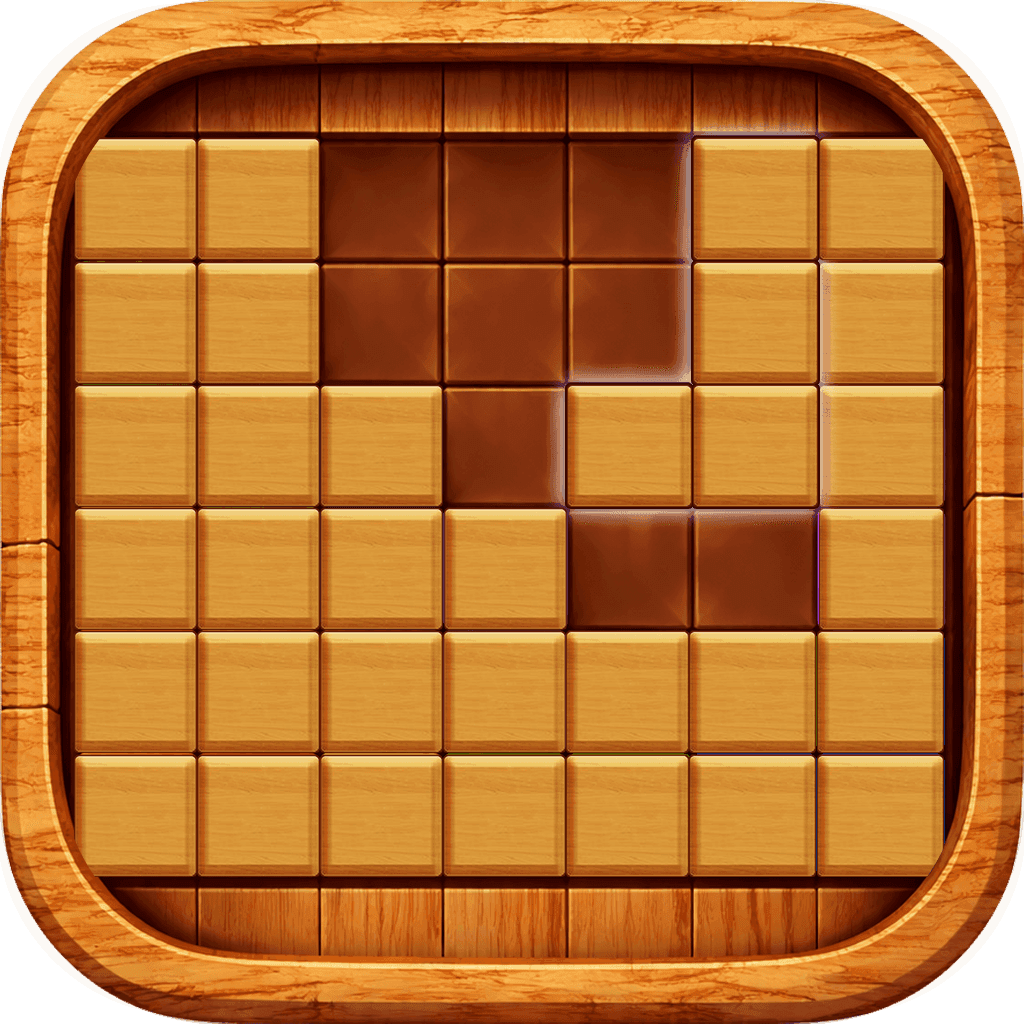
Wood Block Jim has no timer, which is unusual and rather nice, and it means every loss is entirely your own doing. You had all the time in the world and you still put the block in the wrong place.
The good news is that block puzzles fail in one predictable way, so they can be fixed in one predictable way.
Games end on the three-by-three
Look back at how your runs actually end. Almost every time it is the same thing: a square block or a long piece arrives, and there is nowhere on the board with a matching hole. The rest of the grid might be half empty. It does not matter, because the space is the wrong shape.
So the rule that matters is not keep the board clear. It is keep a big square open.
Pick a region of the grid, ideally toward a corner, and defend it. Nothing goes there unless there is no alternative anywhere else. That reserved space is what turns the arrival of the largest piece from a disaster into an ordinary turn.
Fill from the edges
Every block you place should touch either an edge of the grid or another block. Pieces dropped into the middle with gaps around them create single empty squares, and a single empty square is a hole nothing will ever fill.
- Work outward from the corners and edges
- Keep your placements flush against what is already there
- Treat a one-square gap as damage, not as a space
You will accumulate a few one-square holes over a long run anyway. The aim is to accumulate them slowly.
Think three pieces ahead, not one
You are given the pieces in view, and that is the whole planning horizon. Use all of it.
The common mistake is placing the first piece in the best spot for that piece, then discovering the other two do not fit anywhere. Look at all of them, find the most awkward one, and place that one first while you still have choices. The small pieces will always find a home. The big ones will not.
Clearing lines is not the goal
That sounds wrong, so let me be precise: clearing lines is how you score, but chasing a clear at the cost of your board shape is how you lose.
A clear that costs you your reserved square is a bad trade. You gain a few points and lose the run two minutes later. A clear that also tidies an awkward corner is worth twice the points it shows, because it bought you turns.
Combos are the exception worth stretching for. Setting up two rows to go at once is genuinely valuable, and if you can see a two-line clear coming it is usually right to spend a move getting there.
Use the fact that there is no clock
This is a game you are allowed to think in. Nothing happens while you stare at the board. If you cannot see a good placement, stop and count squares rather than dropping a piece to keep the game moving.
Every player who complains that block puzzles are luck is playing them at speed. They are not luck. They are just unforgiving of the move you made without looking.
The short version
- Defend one open three-by-three region at all costs
- Place flush against edges and existing blocks, never into the middle
- Look at all the pieces on offer and place the biggest one first
- A clear that ruins your board shape is not worth the points
- There is no timer, so use it
Run length in this game is almost entirely a measure of how disciplined you were about space. Slow down and the numbers climb on their own.