
The Snake Game: From Nokia to Snake io
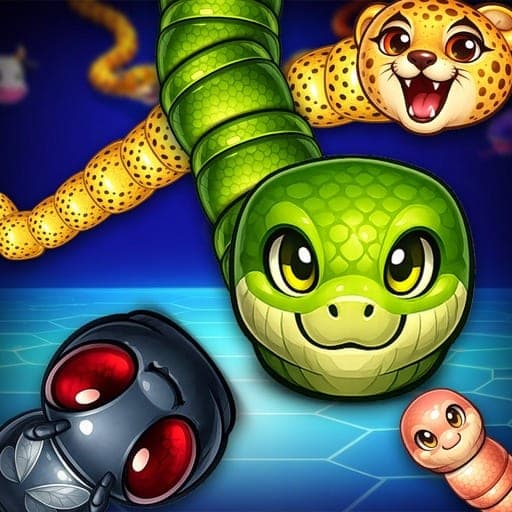
Almost everyone over thirty played Snake on a Nokia. It came on the phone, it needed no explanation, and it was the only game most people had for years. It is probably the most played video game in history by a wide margin, and it was a pack-in.
The version people play now is a different game wearing the same name, and the difference is worth knowing before you play it and wonder why the old instincts do not work.
The original
One snake, a walled rectangle, one piece of food at a time. Eat, grow, do not hit a wall, do not hit yourself.
The whole game was a single trap that you built yourself. Every piece of food made the snake longer, and the longer it got the smaller the safe space became, until eventually there was nowhere to go that was not you.
The skill was spatial planning: filling the board in a pattern that left a route out. Good players moved in tight boustrophedon sweeps, back and forth, so the tail always cleared just before the head arrived.
That game was solitary and finite. You could not win, only last longer.
What the io versions changed
Around 2015 the format was rebuilt as a shared arena, and three rules changed.
- The walls went. The play area is large and shared, and you can usually keep moving.
- Other players exist. Dozens of them, in the same space, at the same time.
- Hitting yourself is no longer the danger. Hitting another player is.
And then the rule that changed everything: when a snake dies, it drops its entire length as food. Kill a long snake and the meal is enormous.
That turns a puzzle about self-containment into a competitive game about traps. You do not grow mainly by eating scattered food. You grow by cutting someone off and taking what they were carrying.
How you actually kill someone
You do not ram them. Running your head into another snake is how you die.
The move is to get in front of them and cross their path so their head hits your body. Every kill in the modern game is a version of that - get ahead, turn across, let them arrive.
Which means the danger is always in front of you, never behind. New players watch their tail, which is a habit from the old game and does nothing here.
Surviving the first minute
A short snake is fast and nimble but has nothing to trap anyone with. Early on you are prey, and there is one correct plan: stay at the edges and eat quietly.
The middle of the map is where the long snakes hunt, because that is where the food from kills lands. Going there small is going to the busiest part of the road on foot.
Eat scattered food at the outside until you have some length, and only then move inward.
Once you are big
Long snakes are slow to turn and take up space. That is a weapon and a liability at once.
- Circling is the standard trap. Loop around a smaller snake and tighten. They have to cross you eventually.
- Never chase. Chasing puts your head behind theirs, which is the one place a kill cannot happen for you and can for them.
- After any big kill, leave. Every snake nearby is coming for the same food, and a stationary snake eating is the easiest target on the map.
- Boosting costs length. It is for closing a trap or escaping one, never for travelling.
The thing both versions share
Underneath the changes it is the same game: a shape that grows until it cannot avoid itself or someone else. The original had you build your own trap. The new one has other people build it for you.
That is why it survived thirty years and a complete change of platform. The core is one rule - you get longer, and longer is harder - and it turns out that rule is enough.
Playing it
Snake Game Jim is the multiplayer version and runs in the browser, so there is nothing to install before the first game. It is the most demanding game here in terms of input, so it is also a decent test of whether browser games run well on your device.
Expect the first several games to be short. Everyone's are. The turn where you stop chasing and start cutting people off is when it clicks.