
Five Board Games You Can Play Online for Free
Not every board game survives the trip to a screen. The ones that do have something in common: they were already about numbers and positions rather than about handling the pieces. Move a game like that onto a phone and nothing is lost. Move a game that was really about the physical objects, and something goes missing.
Here are five that make the trip well, and what each one is actually like to play.
Ludo
The classic four-player race, and the one that works best online for a simple reason - Ludo was always a game of arithmetic wearing a board game costume. You roll, you decide which of four tokens to move, and that decision is the whole game.
Playing it on a screen removes the two most annoying parts of playing it on a table: nobody can miscount, and nobody can knock the board.
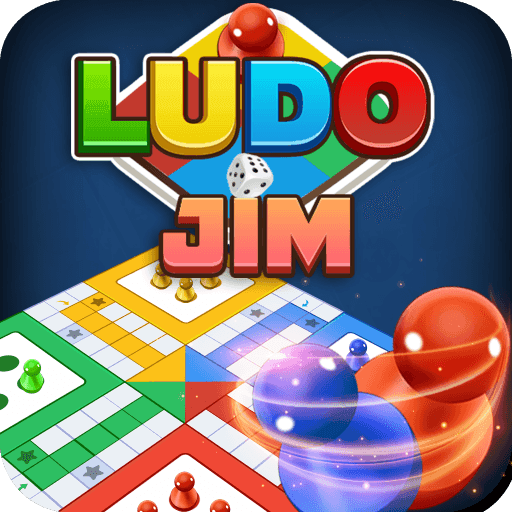
Ludo Jim is the version here. Four players, standard rules, and the capture rule intact, which is the part that makes the game tense.
Carrom
This one is the surprise. Carrom is a physical game about flicking a disc across wood, so it should lose everything on a screen. It does not, because the thing you are actually practising is angles, and angles are the same wherever they happen.
What you lose is the feel of the flick. What you keep is every decision about which piece to take and what the board looks like afterwards.
Carrom Jim handles the queen and cover rules properly, which many quick versions skip.
Snakes and Ladders
The honest one on this list. Snakes and Ladders has no decisions in it at all - you roll, you move, the board does the rest. That is not a criticism. It is the reason it works with young children and with anyone who wants a game that requires no thought.
Online it takes about three minutes, which is roughly the right length.
Snakes and Ladders Jim keeps the original board layout, with the long snake near the top that everyone remembers.
2048
Newer than the others and not a board game in the traditional sense, but it lives on a grid and it is played in turns, which is close enough. Slide the tiles, matching numbers merge, and the board slowly fills up.
It belongs on this list because it is the purest example of a game that only exists on a screen and still feels like a board game. There is no timer and no reflex element. You can leave it mid-move and come back.
2048 Cube Jim is the version here, with the cube presentation rather than flat tiles.
Block puzzle
The Tetris-shaped one, without the falling. You get three pieces at a time, you place them on a grid, and full rows clear. No time pressure at all - the game ends when nothing fits.
This is the one people end up playing longest, because a run can go on for as long as you keep making room. It rewards patience in a way most casual games do not.
Wood Block Jim is straightforward and has no timer, which is the point.
What makes a board game work on a screen
If you are looking beyond this list, the pattern is worth knowing.
- Games about position and numbers translate cleanly. Chess, Ludo, 2048, block puzzles.
- Games about handling physical pieces lose something, but often less than you expect. Carrom is the example.
- Games about reading other people at a table lose the most. Bluffing games are much weaker on a screen with strangers.
- Games with a lot of setup gain the most, because the computer does the setup.
Playing without installing
Everything above runs in the browser. No install, no account, no waiting for a download to finish on a slow connection - open the page and the game is there.
That matters more than it sounds. Most people who look up a board game online want to play it in the next thirty seconds, not to make a decision about what lives on their phone. Anything that runs in a tab clears that bar, and anything that needs a hundred megabyte download usually does not.
Start with Ludo if you want people to play with, and with the block puzzle if you want something to do on your own.