
Carrom Jim: aim, power and the queen
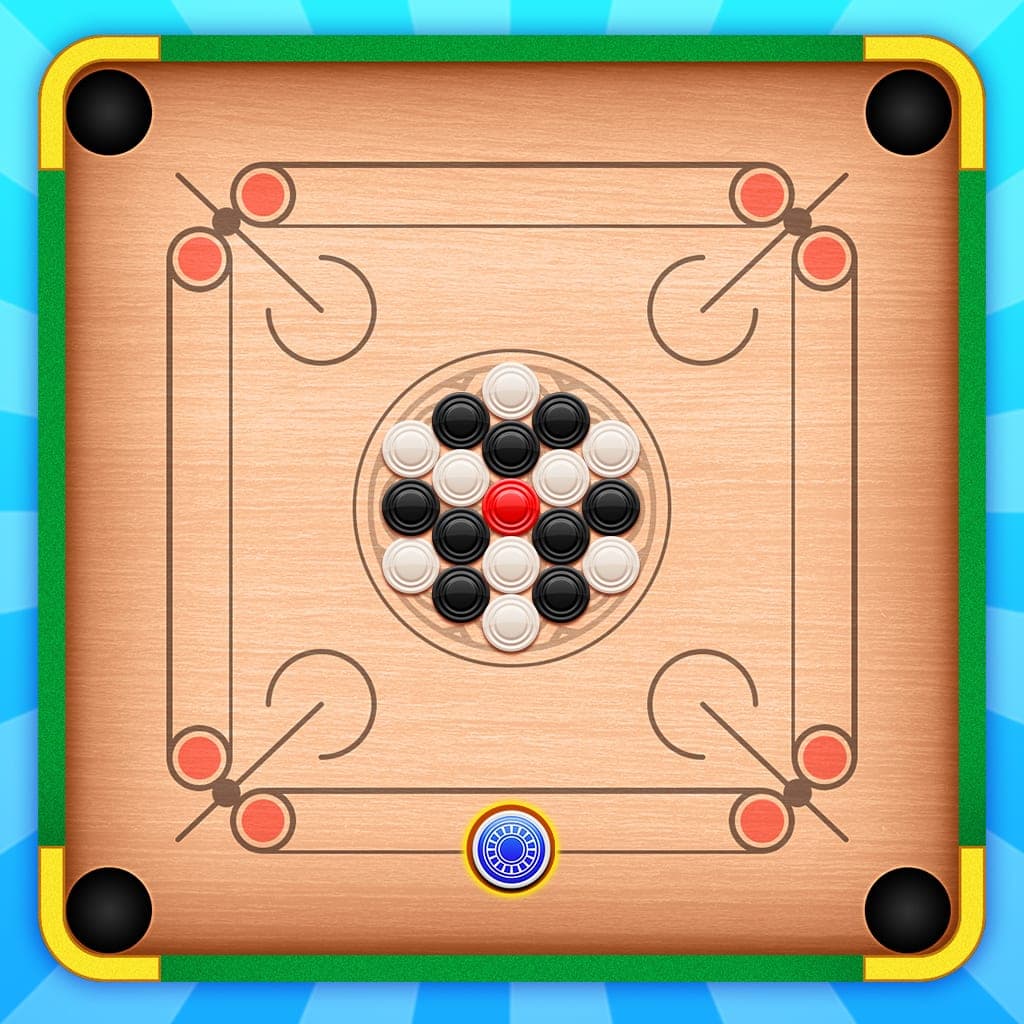
Carrom is one of those games everybody has played and almost nobody has been taught. You learn it by watching an uncle flick a striker across a board and pretending you understood what he did. Carrom Jim keeps the physics honest enough that the real technique transfers, so it is worth actually knowing it.
Power is the thing you are getting wrong
Almost every bad shot in carrom is too hard. A heavy strike sends coins flying to the far rails, scatters your own setup, and usually leaves the board worse for you than before you took the turn.
The board does most of the work. A coin sitting near a pocket needs a nudge, not a hit. Drag back about a third of what feels right and you will pocket more.
- Soft for anything already close to a pocket
- Medium for opening a cluster in the middle
- Hard only when you genuinely need a coin to travel the length of the board
The one place hard is correct is the break. The opening shot should be firm and slightly off-centre, so the cluster spreads rather than sitting in a neat clump you then have to unpick one coin at a time.
Aim at the contact point, not the coin
This is the single idea that turns a beginner into someone who can clear a board. You are not aiming the striker at the coin. You are aiming it at the point on the coin that sends it toward the pocket.
Picture a line from the pocket, through the centre of the coin, and out the other side. Where that line comes out the back of the coin is where the striker has to hit. If the coin is directly between you and the pocket, that is dead centre. If the coin is off to one side, the contact point moves round the edge, and past a certain angle the shot simply does not exist.
Knowing when the shot does not exist is as useful as making it. That is when you play the rails.
The rail shot is not a trick shot
Banking the striker off a side rail feels flashy. It is actually the ordinary answer to a coin sitting behind another coin, and once you have hit a few you will use it constantly.
The rule is the same as light off a mirror: the angle it goes in at is the angle it comes out at. Aim for a point on the rail, not for the coin, and let the geometry do the rest. Soft power, because a rail bounce that arrives hard has no accuracy left in it.
The queen, and the cover that everyone forgets
The red queen is worth the most and is the reason frames are lost.
You cannot just pocket her and bank the points. You have to cover her: pocket one of your own coins on the next shot. Miss the cover and the queen goes straight back to the centre, and you have handed your opponent the middle of the board and a turn.
So do not go for the queen the moment you can. Go for her when you have an easy coin of your own sitting near a pocket to cover with. If your remaining coins are all in awkward places, take the queen later and clear an easy one first.
Leave the board tidy
Your turn ends whether you pocket or not, and what matters almost as much as the coin you took is where everything else ended up.
A shot that pockets one coin but breaks a cluster open into your opponent's half has cost you more than it gained. When two shots are equally likely, take the one that leaves the coins where you want them next turn.
The short version
- Use a third of the power you think you need
- Aim at the contact point on the coin, not the coin
- Rail shots are ordinary, not fancy, and want soft power
- Only take the queen when you have a cover shot ready
- Think about where the board ends up, not just what you pocketed
Carrom rewards restraint more than any board game its size. The player who taps gently and thinks about next turn beats the one who flicks hard and hopes, almost every frame.